


A Punjabi wedding is more than a ceremony; it is a celebration of family, music, community and cultural heritage. Among its most lively pre-wedding events, Jaggo Night in Punjabi Weddings stands out for its energetic dancing, folk songs, decorated earthen pots and joyful processions. The celebration brings relatives and neighbours together, creating memories that often […]
A Punjabi wedding is more than a ceremony; it is a celebration of family, music, community and cultural heritage. Among its most lively pre-wedding events, Jaggo Night in Punjabi Weddings stands out for its energetic dancing, folk songs, decorated earthen pots and joyful processions. The celebration brings relatives and neighbours together, creating memories that often last long after the wedding festivities end.
Although modern weddings increasingly feature DJs, professional dancers and elaborate decorations, the traditional Jaggo celebration carries a deeper meaning. It reflects the excitement of an approaching marriage, the involvement of the extended family and the preservation of Punjabi folk culture. Understanding its rituals and forgotten customs helps families celebrate this special night while keeping its cultural roots alive.
What Is Jaggo Night in Punjabi Weddings?
Jaggo is a traditional Punjabi pre-wedding celebration associated with singing, dancing and moving through the neighbourhood with a decorated vessel or lamp. The Punjabi word jaggo is commonly associated with the idea of awakening or staying awake, reflecting the lively gathering that continues into the night.
Historically, family members participated in the celebration by visiting homes, singing folk songs and inviting people to join the wedding festivities. The event created an atmosphere of shared excitement before the main wedding ceremonies.
The exact customs vary across Punjab and among families living in India and the Punjabi diaspora. Some communities maintain older forms of the ritual, while others organise a modern Jaggo party that combines traditional elements with contemporary entertainment.
Jaggo Ceremony Meaning
The Jaggo ceremony meaning is closely connected with community participation, celebration and the symbolic beginning of wedding festivities. It gives relatives an opportunity to gather, express happiness and prepare for the marriage.
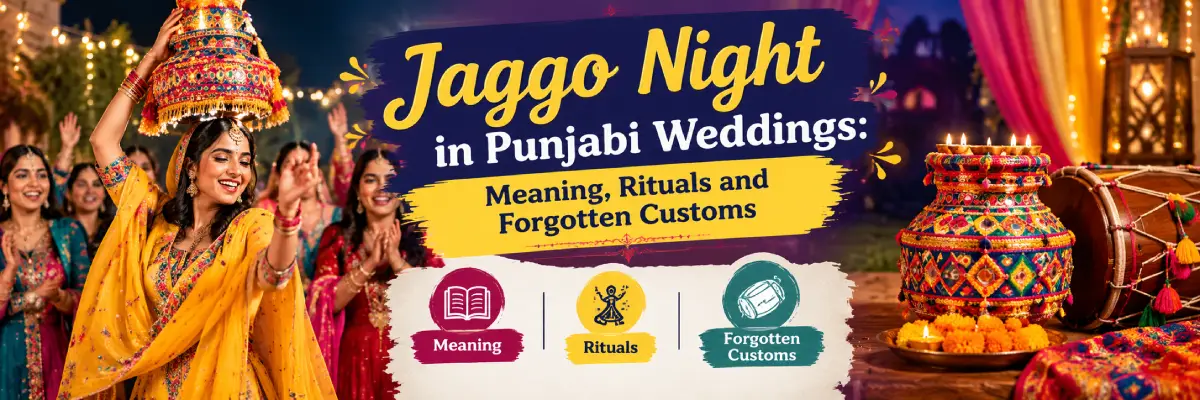
The traditional procession often features a decorated pot, sometimes called a gaggar, carried by a female family member. Depending on the local custom, the pot may be decorated with colourful fabric, ornaments, lights or other embellishments. Some versions incorporate a lit lamp, while contemporary celebrations frequently use battery-operated lights for convenience and safety.
The ceremony also reflects the importance of hospitality in Punjabi culture. Visiting relatives and neighbours creates a shared experience in which the excitement of the wedding extends beyond the immediate household.
The Cultural Significance of Jaggo Night
A Celebration of Family Unity
One of the most important aspects of Jaggo Night in Punjabi Weddings is its ability to bring different generations together. Grandparents, parents, cousins, children and family friends can all participate according to their interests and abilities.
Older relatives may remember the folk songs and customs of their childhood, while younger family members contribute new dance styles and music. This exchange creates an informal setting for passing cultural knowledge from one generation to another.
Jaggo also provides an opportunity for relatives who live far away to reconnect before the wedding. Their participation strengthens family bonds and helps make the celebration feel like a collective occasion rather than a private event.
Preserving Punjabi Folk Heritage
Punjabi folk traditions include songs, dances, stories and customs associated with different stages of life. Wedding celebrations have historically provided an important setting for these traditions to survive.
Jaggo songs may include playful references to family relationships, humorous observations, affectionate teasing and expressions of excitement. The lyrics and musical styles differ by region and family tradition.
When families continue singing traditional songs instead of relying entirely on recorded music, they help preserve a valuable part of Punjabi cultural heritage. Recording older relatives singing these songs can also create a meaningful archive for future generations.
Welcoming the Wedding Celebrations
Jaggo is commonly held during the pre-wedding period, although its timing differs among families. It can serve as an energetic gathering before the wedding day, giving guests an opportunity to celebrate before the formal ceremonies begin.
The atmosphere is usually informal and festive. People may sing, clap, dance in circles or perform bhangra and gidda, depending on their preferences and the local style of celebration.
The event’s importance lies less in following one fixed schedule and more in bringing people together through shared participation.
Traditional Jaggo Ceremony: Important Rituals
The traditional Jaggo ceremony does not follow one universal set of rules. Customs may vary between villages, cities, family backgrounds and communities. However, several elements commonly appear in traditional and contemporary celebrations.
1. Decorating the Jaggo Pot
The decorated vessel is one of the most recognisable features of the celebration. Traditionally, a metal or earthen pot could be adorned with colourful cloth, decorative materials and lights.
The decoration often reflects the creativity of the family. Bright colours, ribbons, embroidery, mirrors and flowers may be used to create an attractive centrepiece.
Modern families sometimes choose lightweight containers and LED lights to make the pot easier to carry. Although the materials may change, decorating the vessel remains a way to connect the celebration with its traditional visual identity.
2. Gathering Female Relatives and Family Members
In many traditional versions, women play a prominent role in carrying the Jaggo vessel, singing folk songs and leading the procession. Mothers, aunts, sisters, cousins and other relatives may help prepare the decorations and organise the celebration.
The involvement of women reflects their longstanding role in Punjabi wedding songs and household festivities. However, contemporary Jaggo celebrations are often open to all family members and guests.
Families can preserve the traditional songs and symbolism while allowing everyone to participate comfortably. The focus should remain on shared happiness rather than rigid expectations about who may join.
3. Singing Traditional Folk Songs
Music gives Jaggo its distinctive energy. Traditional songs may feature rhythmic clapping, call-and-response singing and humorous verses about relatives or wedding preparations.
Some songs are passed down orally, meaning their lyrics may differ between families. Others are learned through regional performances and recordings.
These songs are more than background entertainment. They provide a way to communicate affection, humour and excitement through familiar Punjabi expressions. Inviting older relatives to teach younger participants can make the musical part of Jaggo especially meaningful.
4. Visiting Neighbours and Relatives
In some traditional settings, the Jaggo procession moved through the neighbourhood and visited nearby homes. Participants sang and celebrated while inviting neighbours to share in the wedding excitement.
This custom reflected the close social relationships found in many Punjabi communities. A wedding was often regarded as a community event, with neighbours contributing their time, assistance and good wishes.
Today, some families recreate this experience within a housing society, village street or private venue. Others hold the celebration at home or in a banquet hall. The setting may change, but the idea of sharing happiness remains relevant.
5. Dancing to Punjabi Music
Dancing is now a major feature of many Jaggo nights. Traditional gidda and bhangra may be combined with popular Punjabi songs, contemporary dance music and family performances.
Gidda is traditionally associated with women’s group dancing and expressive gestures, while bhangra is known for energetic movements and rhythmic footwork. Both have developed in different forms over time and can add variety to the celebration.
A family can balance modern entertainment with folk performances by reserving time for traditional songs before the DJ session begins.
Jaggo Night Traditions That Families Still Follow
Many families continue to observe familiar customs even when the overall celebration has become more modern.
Colourful Traditional Clothing
Bright clothing contributes to the visual character of Jaggo. Participants may wear salwar kameez, Punjabi suits, phulkari dupattas, kurta-pajamas or other festive outfits.
Phulkari embroidery is especially associated with Punjabi textile heritage. A traditional embroidered dupatta can add cultural meaning to an outfit without requiring the entire event to follow an old-fashioned dress code.
Families can also choose coordinated colours for photographs while allowing guests to wear what feels comfortable.
Family Participation and Playful Teasing
Punjabi wedding celebrations often include affectionate teasing, jokes and playful performances. Jaggo can provide a relaxed environment in which relatives interact beyond formal introductions.
Cousins may prepare dance routines, siblings may organise games, and older family members may share stories about weddings from previous decades. These activities can make the evening memorable for guests of different ages.
The best celebrations keep the humour friendly and respectful. Participation should be voluntary, especially for people who are uncomfortable dancing or being the centre of attention.
Sharing Food and Refreshments
Food plays an important role in Punjabi hospitality. Depending on the family’s budget and regional preferences, a Jaggo gathering may include tea, snacks, sweets or a larger meal.
Homemade dishes can create a personal connection with family traditions. Guests may also enjoy familiar Punjabi refreshments while taking breaks between dancing and singing.
There is no single menu that defines Jaggo. Families can choose suitable food based on guest preferences, dietary needs and the time of the event.
Forgotten Punjabi Wedding Customs Associated With Jaggo
Modern celebrations offer convenience and entertainment, but certain older practices receive less attention today. Remembering these customs can help families maintain a stronger connection with their cultural background.
1. Learning Songs Directly From Elders
Before recorded music and digital playlists became widely accessible, many wedding songs were learned through participation. Younger women and other family members heard the songs repeatedly during family gatherings and gradually learned the lyrics.
This informal teaching method allowed songs to change naturally across generations while retaining recognisable themes.
Today, families can bring the practice back by organising a short folk-song session before Jaggo. Even learning two or three traditional verses can give younger participants a stronger understanding of their heritage.
2. Handmade Decorations
Commercial decorations, printed props and ready-made lighting are convenient, but handmade items can add a personal touch. In earlier settings, families might use materials available at home to decorate their ceremonial vessel and prepare festive spaces.
The exact materials and methods varied, so it would be inaccurate to describe one decoration style as universal to every Punjabi community.
A modern family can revive the spirit of this custom by decorating the Jaggo pot together. Children can help with safe craft materials, while elders explain the significance of the designs chosen by the family.
3. Neighbourhood Participation
In some communities, weddings involved substantial cooperation between neighbours. People helped with preparations, shared resources and joined celebrations even when they were not part of the closest family circle.
Modern weddings held in hotels or private venues may offer fewer opportunities for this type of interaction.
Families can adapt the tradition by inviting close neighbours, including community elders where appropriate, or arranging a small gathering in a shared space with the necessary permissions. This preserves the welcoming spirit without assuming that every household follows the same customs.
4. Unrecorded Family Stories
An important but often overlooked part of Punjabi wedding heritage is the memory surrounding each custom. Grandparents may remember the songs, clothing, preparations and neighbourhood celebrations associated with their own weddings.
These stories help explain how traditions developed and why families continue to value them.
Recording a short conversation with an older relative can preserve details that are rarely included in formal wedding guides. Families can collect stories, photographs and song lyrics in a digital album for younger relatives to explore.
5. Simple, Community-Centred Celebrations
Elaborate stages, professional lighting and expensive entertainment have become popular at many modern weddings. However, traditional celebrations did not always depend on large budgets or extensive event production.
In many families, the central experience was singing together, preparing decorations and spending time with relatives.
A smaller Jaggo celebration can retain this warmth without copying every modern wedding trend. The emphasis can remain on participation, shared memories and meaningful cultural practices rather than the scale of the event.
How Modern Weddings Are Changing Jaggo Night
The modern celebration reflects changing lifestyles, technology and the expectations of couples and families. Professional DJs, choreographed performances, event photographers and decorative lighting are now common additions.
Some families host Jaggo as a standalone event at a banquet hall, while others combine it with another pre-wedding function. Couples living abroad may organise the celebration in a community venue and incorporate Punjabi traditions into a wider multicultural wedding.
These changes do not automatically mean that the tradition is disappearing. Cultural practices naturally evolve as families move between regions and generations.
The important question is whether the celebration retains meaningful connections to its heritage. Traditional songs, the decorated vessel, family storytelling and community participation can coexist with modern entertainment.
Keeping Tradition and Entertainment in Balance
Families do not have to choose between a traditional event and a contemporary party. A thoughtful programme can make space for both.
For example, the evening might begin with a brief explanation of the Jaggo ceremony meaning, followed by the presentation of the decorated pot and a few traditional folk songs. Family performances can follow, with a DJ session later in the evening.
This approach gives younger guests an opportunity to understand the custom without making the event feel formal or restrictive. It also helps ensure that older family members see familiar elements of their heritage represented.
Planning a Meaningful Jaggo Celebration
A successful Jaggo event does not require an expensive venue or a complicated programme. Good planning can help the family enjoy the celebration while respecting the traditions that make it distinctive.
Choose the Customs That Matter to Your Family
Start by speaking with parents, grandparents and other relatives about the practices they remember. Ask whether the family has traditional songs, a preferred decoration style or a particular way of organising the procession.
Because Punjabi wedding customs vary, this conversation is often more useful than trying to follow a single universal checklist.
Choose a few meaningful traditions and build the celebration around them. This gives the event a personal identity and helps prevent cultural elements from becoming mere decorations.
Prepare Music and Performances in Advance
Create a playlist that includes Punjabi folk songs alongside contemporary favourites. Ask relatives whether they remember songs that would be suitable for the occasion.
If family members want to perform gidda, bhangra or a group dance, allow enough time for practice. Simple routines are often easier for guests of different ages to enjoy.
A balanced playlist also helps maintain the celebratory atmosphere without overwhelming the cultural parts of the event.
Make the Celebration Comfortable and Safe
If the gathering includes a procession, consider the venue, walking route, weather and needs of older guests. Obtain permission before using shared spaces and keep pathways clear.
If the traditional pot includes a flame, follow appropriate fire precautions and local venue rules. Battery-operated lights can provide a safer alternative, particularly around children, crowded dance floors and indoor decorations.
Set reasonable sound levels and respect local noise restrictions. Thoughtful arrangements help ensure that the celebration remains enjoyable for the family and the surrounding community.
Include Different Generations
Invite elders to share songs and stories, while giving younger relatives opportunities to contribute music, photographs and creative decorations.
Children can take part in simple crafts or supervised dance activities. Guests who do not wish to perform can still contribute by singing, taking photographs or enjoying the gathering.
This inclusive approach supports the transmission of cultural knowledge while allowing the celebration to reflect the family’s current lifestyle.
Why Jaggo Night Remains Relevant Today
Jaggo continues to appeal to Punjabi families because it combines entertainment with cultural identity. Its music, colourful decorations and collective participation create a distinctive atmosphere that differs from more formal wedding ceremonies.
For couples planning a wedding, the event can offer a meaningful way to honour their family background. For cultural enthusiasts, it provides an opportunity to understand the relationship between folk music, social customs and community celebrations.
The celebration can also encourage conversations about traditions that might otherwise be forgotten. A song learned from a grandparent or a handmade decoration prepared by relatives can become a lasting reminder of the wedding.
Ultimately, Jaggo Night in Punjabi Weddings is not defined solely by a pot, a procession or a playlist. Its enduring value comes from the people who gather, the memories they share and the cultural knowledge they pass forward.
Conclusion
Jaggo Night in Punjabi Weddings represents the joyful, community-centred side of Punjabi wedding heritage. Its traditional elements include a decorated vessel, folk singing, dancing and, in some communities, visits to neighbouring homes. These practices express happiness, hospitality and the importance of family participation.
Although modern weddings have introduced new forms of entertainment, older customs can still have a meaningful place in the celebration. Families can preserve traditional songs, involve elders, create handmade decorations and record family stories while welcoming contemporary ideas.
By keeping these practices alive, couples can create a celebration that reflects both their present-day preferences and their cultural roots. Jaggo becomes more than a pre-wedding party: it becomes an opportunity to celebrate Punjabi heritage and share it with the next generation.
Frequently Asked Questions (FAQs)
Q1. What is the meaning of Jaggo Night in Punjabi weddings?
Jaggo is a traditional Punjabi pre-wedding celebration associated with singing, dancing and a decorated vessel or lamp. It brings relatives and community members together to share the excitement of an approaching wedding.
Q2. Why is a decorated pot used in the Jaggo ceremony?
The decorated pot is a recognisable symbol of the celebration. It may be adorned with fabric, ornaments and lights, with the exact design varying by family and region. In some traditions, it is carried during a festive procession.
Q3. When is Jaggo celebrated during a Punjabi wedding?
Jaggo is generally organised during the pre-wedding period, but its timing depends on family preferences and regional customs. Some families hold it separately, while others combine it with another wedding function.
Q4. Which songs and dances are performed during Jaggo?
Traditional Punjabi folk songs, rhythmic clapping, gidda and bhangra are common choices. Many modern celebrations also feature popular Punjabi music and choreographed family performances.
Q5. How can families preserve forgotten Punjabi wedding customs?
Families can learn folk songs from elders, use handmade decorations, record wedding stories and invite younger relatives to participate. Including a few traditional practices alongside modern entertainment can help preserve cultural heritage for future generations.