


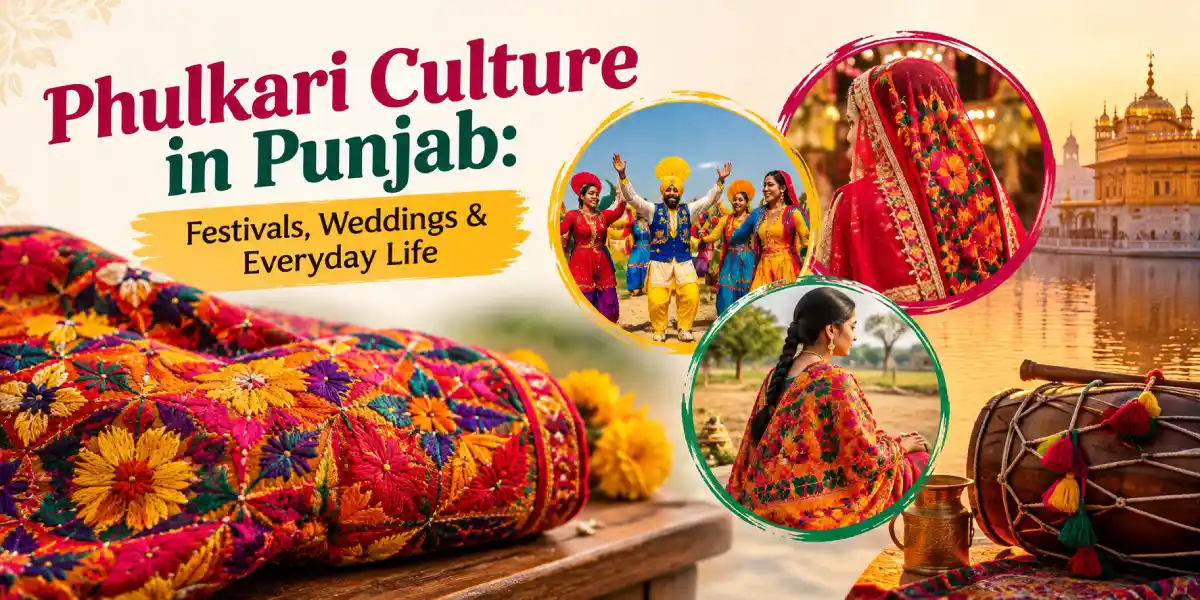
Punjab is known for its vibrant colors, music, food, celebrations, and rich textile traditions. Among these traditions, Phulkari Culture in Punjab holds a special place because embroidered fabrics often carry stories of family, celebration, identity, and creativity. From beautifully decorated dupattas to wedding garments and festive clothing, Phulkari has remained closely connected with Punjabi life. […]
Punjab is known for its vibrant colors, music, food, celebrations, and rich textile traditions. Among these traditions, Phulkari Culture in Punjab holds a special place because embroidered fabrics often carry stories of family, celebration, identity, and creativity.
From beautifully decorated dupattas to wedding garments and festive clothing, Phulkari has remained closely connected with Punjabi life. This article explores its history, cultural meaning, role in weddings and festivals, and continuing presence in everyday life.
What Is Phulkari?
Phulkari literally refers to “flower work” and is a traditional style of embroidery associated particularly with the Punjab region. It is recognized for colorful threadwork worked across fabric to create floral, geometric, and decorative patterns.
Traditional Phulkari embroidery was commonly created by hand, with designs developing through careful stitches and repeated patterns. Different pieces could reflect the creativity, skill, and personal expression of the person who made them.
History of Phulkari in Punjab
The History of Phulkari in Punjab is closely connected with the region’s domestic textile traditions. For generations, women created embroidered fabrics at home, often developing designs through knowledge passed from older family members to younger generations.
The craft became especially meaningful because embroidery was not simply decoration. It could be part of preparing clothing and textiles for important family occasions, including marriages and religious or seasonal celebrations.
A Tradition Passed Through Generations
The Punjabi Phulkari tradition was often learned within families. Young women could observe experienced relatives and gradually develop their own embroidery skills.
This process helped preserve patterns, techniques, and cultural knowledge. As a result, Phulkari became more than a textile craft; it became part of family heritage.
Phulkari Embroidery and Its Unique Style
Phulkari embroidery is known for its colorful appearance and distinctive stitch-based designs. Floral motifs are particularly recognizable, although geometric and abstract patterns are also common.
The embroidery can vary considerably from one textile to another. Differences in colors, patterns, fabric, and coverage give individual Phulkari pieces their own character.
Traditional Phulkari Embroidery
Traditional Phulkari embroidery was generally created with careful handwork rather than mass production. The amount of embroidery could range from relatively simple decorative work to elaborate designs covering large areas of fabric.
One of the most fascinating aspects of Phulkari is the patience required to produce detailed patterns. The craft demonstrates how textile work can combine artistic expression with cultural storytelling.
Phulkari in Punjabi Weddings
Weddings are one of the most important settings for understanding Phulkari in Punjabi weddings. Colorful embroidered fabrics can complement traditional clothing and contribute to the visual richness of wedding celebrations.
Phulkari dupattas, shawls, and other embroidered textiles may be worn or gifted during wedding-related occasions. Their presence can connect contemporary celebrations with older family traditions.
A Meaningful Wedding Tradition
The Phulkari dupatta tradition is particularly associated with Punjabi clothing and celebrations. An embroidered dupatta can add color and craftsmanship to a traditional outfit while also carrying emotional value when it has been passed through a family.
For some families, older embroidered textiles are preserved and brought out for special occasions. This creates a connection between previous generations and new members of the family.
Phulkari Festivals in Punjab
Festivals provide another important setting for traditional clothing and textile traditions. During celebrations, colorful Punjabi outfits and embroidered fabrics can contribute to the festive atmosphere.
Phulkari festivals in Punjab can also be understood through cultural exhibitions, craft fairs, heritage programs, and community celebrations where traditional embroidery is displayed or demonstrated.
Celebrations and Cultural Identity
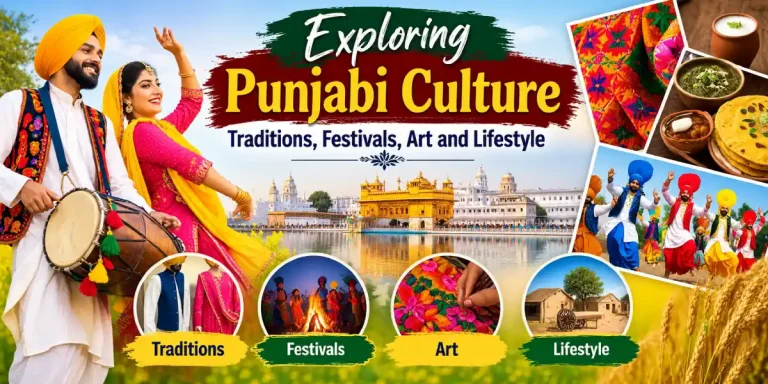
Phulkari can appear alongside other elements of Punjabi culture, including folk music, dance, traditional clothing, and regional food. Together, these elements reflect the vibrant Phulkari Culture in Punjab and help create a strong sense of cultural identity during celebrations.
The continued appearance of embroidered textiles at cultural events shows how Phulkari Culture in Punjab remains relevant even as lifestyles change. It also demonstrates how traditional crafts can continue to connect modern celebrations with Punjab’s cultural heritage.
Phulkari in Everyday Life
Although Phulkari is strongly associated with special occasions, Phulkari in everyday life also has an important place in Punjabi textile culture. Embroidered fabrics may be used in clothing, accessories, home decoration, and gifts.
Modern designers have also adapted traditional motifs for contemporary products. This allows younger generations to experience Phulkari in styles that fit modern wardrobes and lifestyles.
From Family Heirlooms to Modern Fashion
Older Phulkari pieces may be carefully stored because of their sentimental and cultural value. In Phulkari Culture in Punjab, some families treat these textiles as heirlooms that represent memories of parents, grandparents, weddings, and other important occasions.
At the same time, contemporary fashion has introduced Phulkari-inspired designs to new audiences. This combination of heritage and modern creativity has helped Phulkari Culture in Punjab remain visible and relevant in today’s fashion and cultural landscape.
Cultural Significance of Phulkari
The cultural significance of Phulkari goes beyond its colorful appearance. The craft represents creativity, patience, family knowledge, and a connection with Punjabi heritage.
For many people, an embroidered textile can also carry memories of a particular person or occasion. This emotional connection helps explain why Phulkari continues to hold cultural importance.
More Than Decoration
Phulkari demonstrates how everyday objects can become carriers of cultural memory. Patterns, colors, techniques, and family stories can all contribute to the meaning attached to an embroidered piece.
This makes Phulkari Culture in Punjab an important example of how traditional crafts can preserve identity across generations.
How Phulkari Is Changing Today
Modern technology and changing fashion preferences have influenced Phulkari Culture in Punjab, particularly the way Phulkari is produced, styled, and worn today. Alongside traditional hand embroidery, machine-made designs and contemporary interpretations are now available.
Even with these changes, handmade Phulkari continues to attract interest because of its craftsmanship and connection to heritage. Phulkari Culture in Punjab is also evolving as designers and artisans experiment with modern clothing styles while retaining recognizable traditional elements.
Keeping the Tradition Alive
Cultural workshops, exhibitions, artisan markets, museums, and heritage events can help introduce Phulkari to younger audiences. Education about traditional techniques can also encourage appreciation for handmade craftsmanship.
The future of Phulkari Culture in Punjab depends partly on maintaining knowledge of traditional methods while allowing the craft to evolve naturally with contemporary life.
Why Phulkari Still Matters
Phulkari remains relevant because it connects the past with the present. It can be seen at celebrations, preserved as a family keepsake, incorporated into fashion, or displayed as an example of regional craftsmanship.
The Punjabi Phulkari tradition also demonstrates how cultural practices can adapt without completely losing their identity. Its continued presence in clothing and cultural events shows the lasting relationship between art, community, and heritage.
Conclusion
Phulkari Culture in Punjab represents a colorful and meaningful part of Punjabi heritage. Its connection with weddings, festivals, family traditions, clothing, and everyday life shows how a traditional craft can remain relevant across generations.
From traditional hand embroidery to modern fashion, Phulkari continues to evolve while retaining its cultural identity. Preserving its techniques, stories, and craftsmanship can help ensure that this distinctive Punjabi tradition remains appreciated in the future.
Frequently Asked Questions (FAQs)
Q 1. What is Phulkari in Punjabi culture?
Phulkari is a traditional embroidery style associated with Punjab. It is recognized for colorful threadwork and decorative floral or geometric patterns and has strong connections with family traditions and celebrations.
Q 2. Why is Phulkari important in Punjabi weddings?
Phulkari is traditionally associated with Punjabi wedding clothing and gifts. Embroidered dupattas and other textiles can add cultural significance and craftsmanship to wedding celebrations.
Q 3. What is the history of Phulkari in Punjab?
Phulkari developed as an important domestic embroidery tradition in the Punjab region. Knowledge and techniques were often passed between generations, helping preserve the craft as part of regional heritage.
Q 4. Is Phulkari still used in everyday life?
Yes. Phulkari-inspired designs can be found in clothing, accessories, home décor, and contemporary fashion. Traditional handmade pieces are also preserved as family heirlooms.
Q 5. What makes Phulkari culturally significant?
Phulkari represents craftsmanship, creativity, family heritage, and Punjabi cultural identity. Its importance comes not only from its decorative designs but also from the memories and traditions associated with the textiles.