

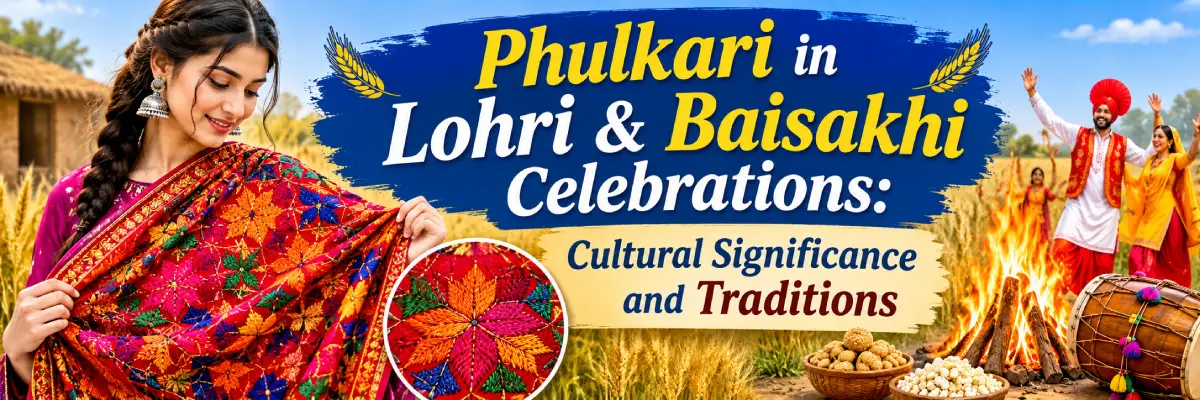
Punjab is known for its colourful festivals, lively music, traditional clothing, and rich cultural heritage. Among its most beautiful art forms, Phulkari holds a special place in Punjabi celebrations. This traditional embroidery transforms simple fabrics into colourful pieces of art that reflect happiness, prosperity, and cultural identity. Phulkari Celebrations are particularly meaningful during Lohri and […]
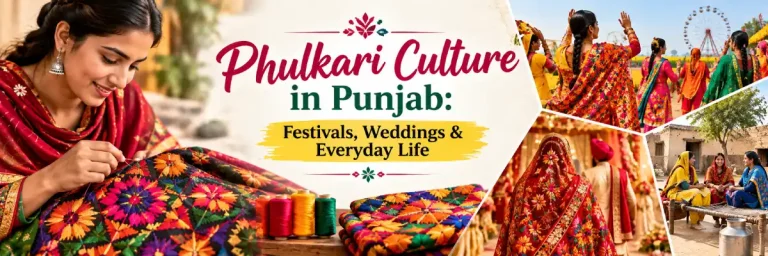
Punjab is known for its colourful festivals, lively music, traditional clothing, and rich cultural heritage. Among its most beautiful art forms, Phulkari holds a special place in Punjabi celebrations. This traditional embroidery transforms simple fabrics into colourful pieces of art that reflect happiness, prosperity, and cultural identity. Phulkari Celebrations are particularly meaningful during Lohri and Baisakhi, when traditional clothing and folk customs bring communities together. From beautifully embroidered dupattas to traditional Punjabi suits, Phulkari continues to connect modern generations with Punjab’s artistic history.
What Is Phulkari? Understanding Punjab’s Traditional Embroidery
Phulkari is a traditional embroidery art that originated in the Punjab region. The word Phulkari combines two Punjabi words: ‘Phul’, meaning flower, and ‘Kari’, referring to craft or work. Together, the name represents the beautiful floral patterns created through colourful thread embroidery.
Traditionally, women used colourful silk floss threads to create intricate designs on handwoven cotton fabric. These embroidered fabrics were commonly used for dupattas, shawls, and garments worn during weddings, festivals, and family celebrations.
Phulkari is more than decorative clothing. It represents creativity, family traditions, cultural pride, and the artistic skills passed from one generation to another.
Phulkari Celebrations During Lohri
Lohri is one of Punjab’s most popular winter festivals. Celebrated in January, it marks the end of winter and is traditionally associated with harvest celebrations, warmth, and prosperity.
During Lohri, families and communities gather around bonfires, sing traditional folk songs, dance to the beats of dhol, and share festive foods. Traditional Punjabi clothing adds another layer of colour to these celebrations.
Traditional Phulkari Outfits for Lohri
Phulkari embroidery is often seen in festive outfits worn during Lohri celebrations. Women commonly choose colourful Punjabi suits, embroidered dupattas, and traditional shawls.
Popular outfit choices include:
- Phulkari Dupattas: Bright embroidered dupattas featuring floral patterns and colourful threadwork.
- Traditional Punjabi Suits: Comfortable outfits decorated with beautiful Phulkari designs.
- Bagh Embroidery: Heavily embroidered fabric that creates an attractive and festive appearance.
- Phulkari Shawls: Traditional embroidered coverings that complement winter celebrations.
Cultural Meaning of Phulkari in Lohri Celebrations
The colourful embroidery represents happiness, warmth, and the joyful spirit of Punjabi culture. Wearing Phulkari during Lohri also reflects respect for traditional clothing and regional craftsmanship.
In many Punjabi families, traditional outfits are selected for important celebrations because they help preserve family customs and cultural connections.
Phulkari in Baisakhi Celebrations
Baisakhi is another important festival in Punjab, celebrated in April. It marks the traditional harvest season and holds significant religious and cultural importance, particularly within Sikh communities.
The festival is celebrated with enthusiasm through traditional dances, fairs, music, religious gatherings, and community events. Phulkari plays an important role in the festive appearance of traditional Punjabi clothing.
How Phulkari Adds Colour to Baisakhi
Baisakhi celebrations are known for their bright colours and energetic atmosphere. Phulkari embroidery perfectly complements this festive environment.
Women often wear colourful Punjabi suits with embroidered dupattas, while traditional Phulkari patterns showcase the artistic beauty of Punjab.
Common festive styling choices include:
- Bright yellow and orange Phulkari dupattas.
- Red and pink embroidered Punjabi suits.
- Floral-patterned traditional shawls.
- Colourful Phulkari accessories for festive outfits.
Phulkari and Punjabi Harvest Traditions
Baisakhi celebrates the agricultural heritage of Punjab. Its connection with harvest traditions makes Phulkari particularly meaningful during the festival.
Floral patterns, vibrant colours, and detailed embroidery reflect the beauty of nature and the happiness associated with a successful harvest.
Through these traditional designs, Phulkari Celebrations highlight the connection between Punjabi art, agriculture, and community life.
Cultural Significance of Phulkari in Punjabi Heritage
Phulkari represents an important part of Punjab’s cultural identity. Historically, embroidery was a creative activity practised by women within households, where skills and patterns were shared across generations.
Traditional embroidered fabrics were often prepared for weddings, family occasions, and religious celebrations. They also carried emotional and cultural value because of the time and effort involved in creating them.
Symbolism Behind Traditional Phulkari Designs
Different Phulkari patterns and colours can express different artistic and cultural ideas.
Some commonly recognised associations include:
- Flowers: Represent beauty, nature, and happiness.
- Red: Often associated with celebrations, weddings, and auspicious occasions.
- Yellow: Connected with brightness, sunshine, and festive energy.
- Green: Often associated with nature, growth, and freshness.
- Geometric Patterns: Showcase creativity, symmetry, and traditional craftsmanship.
The exact meanings can vary between families, regions, and embroidery traditions.
Phulkari as a Symbol of Punjabi Identity
Phulkari is recognised as a distinctive expression of Punjabi craftsmanship. Its colourful patterns and traditional techniques help preserve regional artistic heritage.
Today, it is worn not only during festivals but also at weddings, cultural programmes, exhibitions, and special family gatherings.
Punjabi Phulkari Embroidery Traditions
Traditional Phulkari embroidery involves patience, creativity, and careful attention to detail. Historically, women developed their own embroidery styles and passed their knowledge to younger family members.
The embroidery was traditionally worked from the reverse side of the fabric, with the design becoming visible on the front through long and short darn stitches.
Traditional Techniques Used in Phulkari
Some important embroidery styles include:
1. Phulkari
This style features colourful floral and geometric patterns distributed across the fabric. The designs may leave some areas of the base cloth visible.
2. Bagh Phulkari
Bagh means garden. This style features dense embroidery that can cover almost the entire surface of the fabric, creating a garden-like appearance.
3. Chope
Chope is traditionally associated with important family occasions, especially weddings. It is often recognised for its distinctive geometric embroidery and traditional red colour.
4. Sainchi Phulkari
This style often features figurative designs depicting people, animals, village activities, and scenes from everyday Punjabi life.
5. Darshan Dwar
Darshan Dwar traditionally features architectural and symbolic designs associated with religious spaces and ceremonial settings.
Traditional Phulkari Designs and Patterns
Traditional Phulkari designs are recognised for their vibrant colours, symmetrical arrangements, and detailed embroidery.
Floral patterns remain among the most popular designs, but traditional collections also include geometric shapes, birds, animals, and everyday cultural scenes.
Popular Colours in Phulkari
Different colours create different visual effects in traditional embroidery.
- Red: A popular choice for weddings and festive clothing.
- Orange: Adds warmth and brightness to traditional outfits.
- Yellow: Reflects the cheerful atmosphere of harvest festivals.
- Pink: Creates a soft and colourful appearance.
- Green: Adds a natural touch to embroidered designs.
- Golden: Gives traditional fabrics a decorative and festive finish.
Modern Phulkari Fashion Trends
Phulkari has evolved with changing fashion preferences. Contemporary designers combine traditional embroidery with modern clothing styles to make it suitable for different occasions.
Popular modern uses include embroidered jackets, handbags, saree borders, footwear, cushion covers, and decorative home furnishings.
Despite these changes, traditional embroidery techniques continue to influence modern Phulkari collections.
How Phulkari Connects Lohri and Baisakhi With Punjabi Culture?
Lohri and Baisakhi have different seasonal and cultural associations, but both festivals celebrate community, tradition, and happiness.
Phulkari connects these celebrations through traditional clothing and regional craftsmanship. During Lohri, its colourful embroidery complements winter festivities and bonfire gatherings. During Baisakhi, bright patterns reflect the joyful atmosphere of harvest celebrations.
These traditions also provide opportunities for younger generations to understand Punjabi clothing, embroidery techniques, and cultural history.
Phulkari Celebrations therefore represent more than fashion. They help preserve an artistic tradition that continues to hold an important place in Punjabi identity.
How to Preserve the Traditional Art of Phulkari
Preserving Phulkari requires appreciation for traditional craftsmanship and support for the artisans who continue this art form.
Here are some practical ways to support its preservation:
- Purchase Authentic Products: Choose traditionally embroidered products from reliable artisans and craft organisations.
- Learn About Its History: Understand the different embroidery styles and their cultural backgrounds.
- Support Local Artisans: Encourage handmade products and traditional embroidery businesses.
- Wear Phulkari During Festivals: Include traditional embroidered outfits in Lohri, Baisakhi, and other cultural celebrations.
- Share Cultural Knowledge: Introduce younger generations to Punjabi embroidery and its historical importance.
These small efforts can help keep traditional craftsmanship relevant in modern society.
Conclusion
Phulkari is one of the most beautiful expressions of Punjabi artistic heritage. Its colourful embroidery, traditional patterns, and cultural symbolism make it an important part of Lohri and Baisakhi celebrations. From floral dupattas to heavily embroidered Bagh designs, every style reflects creativity and regional identity.
Phulkari Celebrations continue to connect traditional customs with modern fashion while preserving the craftsmanship of earlier generations. Whether worn during harvest festivals, family gatherings, or cultural events, Phulkari remains a meaningful symbol of Punjab’s rich traditions.
Frequently Asked Questions (FAQs)
Q1. What is the cultural significance of Phulkari?
Phulkari represents Punjabi cultural identity, traditional craftsmanship, creativity, and family heritage. It is commonly associated with weddings, festivals, and important family occasions.
Q2. Why is Phulkari worn during Lohri celebrations?
Phulkari is worn during Lohri because its colourful embroidery complements the festive atmosphere. It also reflects traditional Punjabi clothing and cultural pride.
Q3. How is Phulkari connected to Baisakhi?
Phulkari is coPopular types include Phulkari, Bagh, Chope, Sainchi Phulkari, and Darshan Dwar. Each style has distinctive patterns, embroidery techniques, and traditional uses.nnected to Baisakhi through Punjabi harvest traditions and festive clothing. Its bright colours and floral designs complement the celebrations and agricultural heritage of Punjab.
Q4. What are the most popular types of Phulkari embroidery?
Popular types include Phulkari, Bagh, Chope, Sainchi Phulkari, and Darshan Dwar. Each style has distinctive patterns, embroidery techniques, and traditional uses.
Q5. What fabrics are traditionally used for Phulkari embroidery?
Traditional Phulkari was commonly embroidered on handwoven cotton fabric using colourful silk floss threads. Today, artisans also use different fabrics to create modern Phulkari products.